Camera Intelligence — October 2026: Fire & Arson
OpenAI gpt-6-luna · TypeSafe AI Jev 1.14.0 · LiquidAI d1-2B (bfloat16) · Qwen3.5-9B (Q4_K_M)
- Written by
- Agentinosaurus Team
- Published
- Reading time
- 3 min read
From a brief ignition beside a van to a room filled with flames. Four models, five recordings, and the difference between recognising fire and recognising how it starts.
Seeing flames and seeing someone start a fire
A fire already filling a room and a person setting fire to a vehicle ask different things of a camera. We tested both: three arson recordings, a cooktop ignition experiment and an established room fire. A separate no-fire control tested whether the models stayed quiet.
Each model received identical frames. A later match within the reference event counts as a detection; earlier missed observations do not turn the entire event into a failure. These are five selected cases, not a general fire-detection accuracy claim.
A fire at a house entrance
Event: “A person sets fire to property.” Night footage, a changing camera view and bright highlights make this a difficult scene.
| Model | Detected¹ | False alerts² | Median response | API cost | RAM³ GiB | VRAM³ GiB |
|---|---|---|---|---|---|---|
| OpenAI gpt-6-luna | No | 0% | 0.97s | $0.00239 | — | — |
| TypeSafe AI Jev 1.14.0 | Yes | 0% | 0.91s | $0.00332 | — | — |
| LiquidAI d1-2B (bfloat16) | No | 0% | 0.43s | — | 4.27 | 7.05 |
| Qwen3.5-9B (Q4_K_M) | No | 0% | 2.22s | — | 13.58 | 6.65 |
A vehicle catches fire
Event: “A person sets fire to property.” A brief interaction beside a van is followed by visible flames.
| Model | Detected¹ | False alerts² | Median response | API cost | RAM³ GiB | VRAM³ GiB |
|---|---|---|---|---|---|---|
| OpenAI gpt-6-luna | No | — | 0.41s | $0.00031 | — | — |
| TypeSafe AI Jev 1.14.0 | Yes | — | 0.50s | $0.00042 | — | — |
| LiquidAI d1-2B (bfloat16) | No | — | 1.36s | — | 4.27 | 7.05 |
| Qwen3.5-9B (Q4_K_M) | Yes | — | 1.78s | — | 13.58 | 6.65 |
One incident, several camera views
Event: “A person sets fire to property.” The recording shows the incident from several camera views.
| Model | Detected¹ | False alerts² | Median response | API cost | RAM³ GiB | VRAM³ GiB |
|---|---|---|---|---|---|---|
| OpenAI gpt-6-luna | No | 0% | 0.58s | $0.00122 | — | — |
| TypeSafe AI Jev 1.14.0 | Outside interval only | 0% | 0.48s | $0.00169 | — | — |
| LiquidAI d1-2B (bfloat16) | No | 0% | 0.45s | — | 4.27 | 7.05 |
| Qwen3.5-9B (Q4_K_M) | No | 0% | 2.19s | — | 13.58 | 6.65 |
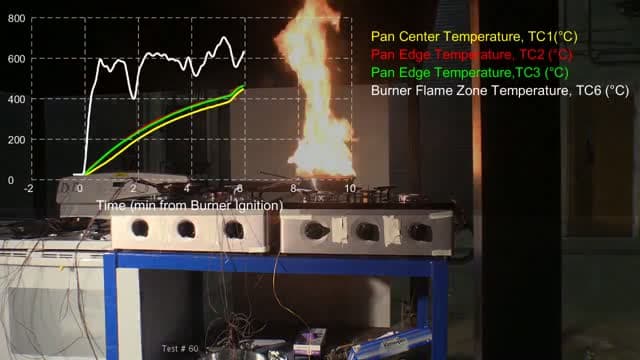
When the contents of a pan ignite
Event: “The contents of a pan catch fire.” This distinguishes the requested ignition from the ordinary burner flame underneath.
| Model | Detected¹ | False alerts² | Median response | API cost | RAM³ GiB | VRAM³ GiB |
|---|---|---|---|---|---|---|
| OpenAI gpt-6-luna | No | 0% | 1.08s | $0.00118 | — | — |
| TypeSafe AI Jev 1.14.0 | Yes | 0% | 0.46s | $0.00125 | — | — |
| LiquidAI d1-2B (bfloat16) | No | 0% | 1.37s | — | 4.27 | 7.05 |
| Qwen3.5-9B (Q4_K_M) | Yes | 0% | 3.78s | — | 13.58 | 6.65 |
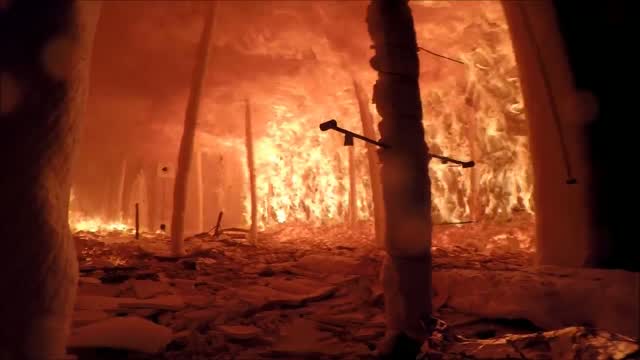
A room already on fire
Event: “Flames are visible inside a room.” The fire is established when the recording begins, so this tests recognition rather than early warning.
| Model | Detected¹ | False alerts² | Median response | API cost | RAM³ GiB | VRAM³ GiB |
|---|---|---|---|---|---|---|
| OpenAI gpt-6-luna | Yes | — | 0.97s | $0.02189 | — | — |
| TypeSafe AI Jev 1.14.0 | Yes | — | 0.63s | $0.02339 | — | — |
| LiquidAI d1-2B (bfloat16) | Yes | — | 1.39s | — | 4.27 | 7.05 |
| Qwen3.5-9B (Q4_K_M) | Yes | — | 3.77s | — | 13.58 | 6.65 |
What the control tells us
All models were also tested on the same 20-second normal-activity segment with two Events: visible fire and a person setting fire to property. OpenAI gpt-6-luna: 0% false alerts; TypeSafe AI Jev 1.14.0: 0% false alerts; LiquidAI d1-2B (bfloat16): 0% false alerts; Qwen3.5-9B (Q4_K_M): 0% false alerts. This narrow control does not establish a field false-alarm rate.
How to read these results
¹ Detected means at least one match during the incident. Unknown means the model was uncertain. These examples compare recognition, not guaranteed early warning.
² False alerts count alerts during the scored scenes without the requested Event. The small no-fire comparison cannot establish a general false-alarm rate.
³ Memory figures show peak usage on an RTX 4080 Laptop GPU, including model loading. Liquid and Qwen use different GPU memory measurements, so these figures are approximate comparisons, not minimum hardware requirements.
Response times measure the model response, not the time from an incident to an alert. Cloud costs are estimates; local hardware and electricity are excluded. “—” means unavailable or not applicable.