Camera Intelligence — October 2026: Security & Property Access
OpenAI gpt-6-luna · TypeSafe AI Jev 1.14.0 · Liquid d1-2B BF16 · Qwen3.5-9B Q4_K_M
- Written by
- Agentinosaurus Team
- Published
- Reading time
- 4 min read
Five security scenarios, four models, and a health-accident negative control. How short Events change what a camera notices.
The words we use change what cameras look for
A person approaches a house. Someone climbs over a counter. A figure appears beside an entrance. Security monitoring covers many different moments, and people describe them in their own words.
We tested five surveillance recordings with five short Events, then asked an unrelated question about one of those same recordings: “health accident”. Every model received the same frames for each comparison. A security video counts as detected when at least one observation returns match.
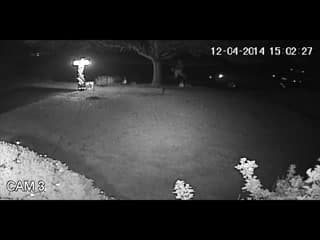
Approaching a property
Event: “A person enters the property or approaches the house.”
A person approaches a residential property. The Event asks about approaching the house or entering the grounds.
| Model | Detected | First match window | Median response | API cost | RAM GiB | VRAM GiB |
|---|---|---|---|---|---|---|
| OpenAI gpt-6-luna | Yes | 0–20s | 0.42s | $0.00239 | — | — |
| TypeSafe AI Jev 1.14.0 | Yes | 0–20s | 0.43s | $0.00333 | — | — |
| Liquid d1-2B BF16 | Yes | 0–20s | 0.44s | — | 4.27 | 4.70 |
| Qwen3.5-9B Q4_K_M | Yes | 0–20s | 2.26s | — | 11.83 | 6.64 |
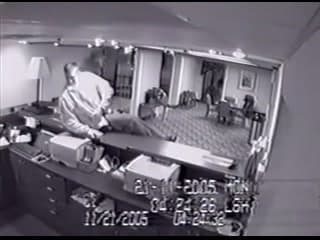
Crossing the counter
Event: “Someone climbs over the counter or opens the cash register without authorization.”
The recording shows activity around a counter. The Event combines climbing over it with opening a cash register without authorization.
| Model | Detected | First match window | Median response | API cost | RAM GiB | VRAM GiB |
|---|---|---|---|---|---|---|
| OpenAI gpt-6-luna | Yes | 0–20s | 0.52s | $0.00082 | — | — |
| TypeSafe AI Jev 1.14.0 | Yes | 0–20s | 0.41s | $0.00113 | — | — |
| Liquid d1-2B BF16 | Yes | 0–20s | 0.44s | — | 4.27 | 4.70 |
| Qwen3.5-9B Q4_K_M | Yes | 0–20s | 2.20s | — | 11.83 | 6.64 |
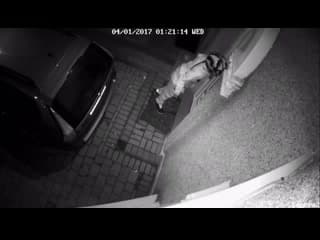
Approaching an entrance
Event: “Someone approaches the entrance.”
A nighttime view beside a parked car. The Event simply asks whether someone approaches the entrance.
| Model | Detected | First match window | Median response | API cost | RAM GiB | VRAM GiB |
|---|---|---|---|---|---|---|
| OpenAI gpt-6-luna | Yes | 0–20s | 0.46s | $0.00044 | — | — |
| TypeSafe AI Jev 1.14.0 | Yes | 0–20s | 0.45s | $0.00061 | — | — |
| Liquid d1-2B BF16 | Yes | 0–20s | 1.48s | — | 4.27 | 4.70 |
| Qwen3.5-9B Q4_K_M | Yes | 0–20s | 2.21s | — | 11.83 | 6.64 |
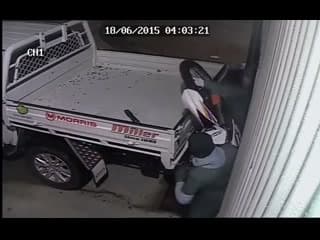
A security incident in a loading area
Event: “security incident”
A loading-area recording with a truck and people beside it. Here the Event is the broad phrase “security incident”.
| Model | Detected | First match window | Median response | API cost | RAM GiB | VRAM GiB |
|---|---|---|---|---|---|---|
| OpenAI gpt-6-luna | Yes | 20–40s | 1.04s | $0.00060 | — | — |
| TypeSafe AI Jev 1.14.0 | Yes | 0–20s | 0.45s | $0.00082 | — | — |
| Liquid d1-2B BF16 | Yes | 20–40s | 0.45s | — | 4.27 | 4.70 |
| Qwen3.5-9B Q4_K_M | Yes | 0–20s | 2.68s | — | 11.83 | 6.64 |
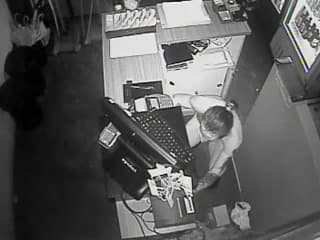
Access behind a counter
Event: “Unauthorized access.”
An indoor counter-area recording, tested with “Unauthorized access.” This wording leaves more interpretation to the model.
| Model | Detected | First match window | Median response | API cost | RAM GiB | VRAM GiB |
|---|---|---|---|---|---|---|
| OpenAI gpt-6-luna | No | — | 0.62s | $0.00136 | — | — |
| TypeSafe AI Jev 1.14.0 | Yes | 0–20s | 0.45s | $0.00191 | — | — |
| Liquid d1-2B BF16 | No | — | 0.43s | — | 4.27 | 4.70 |
| Qwen3.5-9B Q4_K_M | Yes | 0–20s | 2.22s | — | 11.83 | 6.64 |
Extra: the same footage, a different question
We also asked only “health accident” about the loading-area recording, where no health accident was expected. Would each model distinguish the security scene from an unrelated Event?
OpenAI and TypeSafe returned no_match throughout. Liquid produced no alert, but returned unknown for 33% of observations. Qwen returned match for every observation: it detected all five security videos, yet also raised an unwanted health alert on this control.
An unwanted alert means any match in this negative-control video. Unknown is shown separately; it is not treated as a confident correct rejection. This one control cannot establish a general false-positive rate.
| Model | Unwanted alert | No-match observations | Unknown observations | Median response | API cost |
|---|---|---|---|---|---|
| OpenAI gpt-6-luna | No | 100% | 0% | 0.41s | $0.00060 |
| TypeSafe AI Jev 1.14.0 | No | 100% | 0% | 0.68s | $0.00082 |
| Liquid d1-2B BF16 | No | 67% | 33% | 0.45s | — |
| Qwen3.5-9B Q4_K_M | Yes | 0% | 0% | 2.68s | — |
What the comparison tells us
Video-level detection in this selected set: OpenAI gpt-6-luna: 80%; TypeSafe AI Jev 1.14.0: 100%; Liquid d1-2B BF16: 80%; Qwen3.5-9B Q4_K_M: 100%.
These are selected examples with refined Event wording, not a general accuracy ranking. The words used to describe an Event can change the result.
Permission is often outside the image. A camera can show a person crossing a boundary; whether they are authorized may require site rules, schedules or other context. These results measure agreement with the requested video-level expectations, not proof of criminal intent.
Reading the results
Detection means at least one match during the video. The first-match window is measured from the start of the recording, not from the start of an incident. Unknown means the model was uncertain.
All models saw the same images. The five security examples were expected to produce a match; the separate health example was expected to stay quiet. These results do not establish a general false-alarm rate.
Response times measure the model response, not the time from an incident to an alert. Cloud costs are estimates; local hardware and electricity are excluded. “—” means unavailable or not applicable.
Memory figures show peak usage on an RTX 4080 Laptop GPU, including model loading. Liquid and Qwen use different GPU memory measurements, so these figures are approximate comparisons, not minimum hardware requirements.